
Pressure washing for renters: who's responsible, you or your landlord?
By Aisha Vogel · Updated 2026-07-10
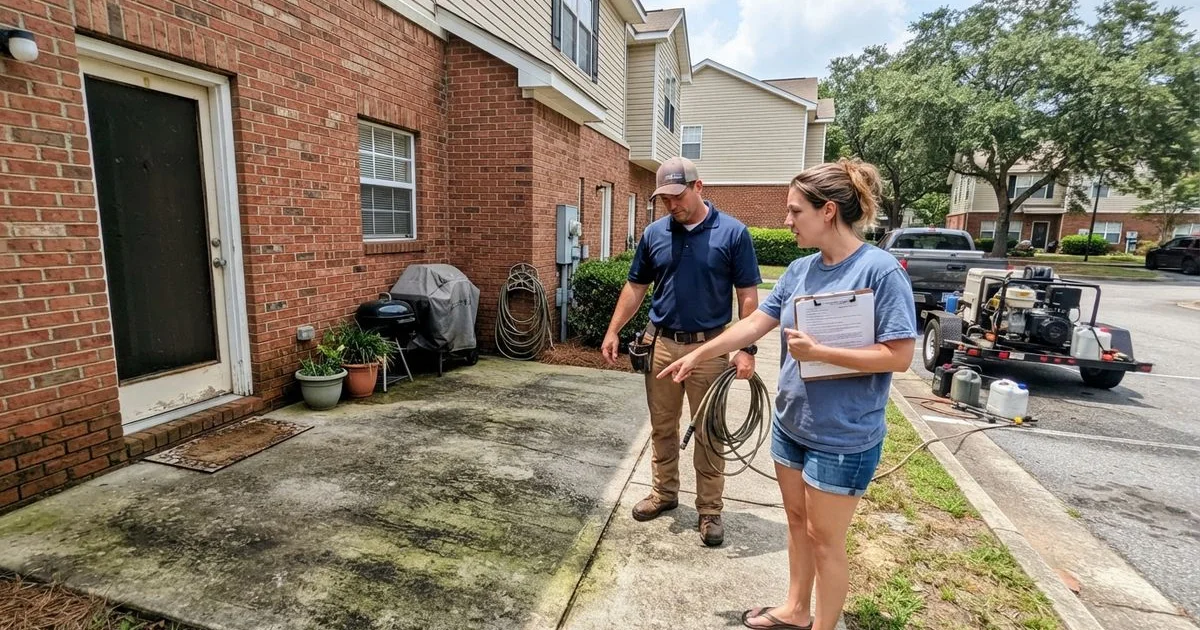
If you’re renting and the siding, deck, or patio at your place is looking rough, the question of who’s supposed to deal with it isn’t always obvious. Here’s how to figure out where the line usually falls, and how to raise it without creating friction with your landlord.
This is general information, not legal advice. Landlord-tenant obligations vary by lease and local ordinance, so check your specific lease or consult a tenant rights resource for questions about your situation.
Start with your lease
The lease is the actual answer here, more than general assumptions about what’s “normal.” Look for language about exterior maintenance, common area upkeep, or tenant responsibilities for the yard, patio, or deck. Some leases are explicit about it; many say nothing at all, which usually defaults to general landlord-tenant norms in your area rather than a clear rule either way.
General patterns, not guarantees
| Situation | Typically whose responsibility |
|---|---|
| Whole-house siding, roof, or exterior structure | Usually the landlord, as part of property upkeep |
| A private patio, deck, or driveway you have exclusive use of | Varies widely, check your lease |
| Common areas in a multi-unit property | Usually the landlord or property management company |
| Damage you caused yourself | Usually you |
Single-family home rentals tend to have more variation landlord to landlord, since there’s no standardized maintenance schedule the way there often is at a managed apartment complex. Some landlords handle exterior cleaning proactively; others expect tenants to flag issues as they come up.
How to raise it without a fight
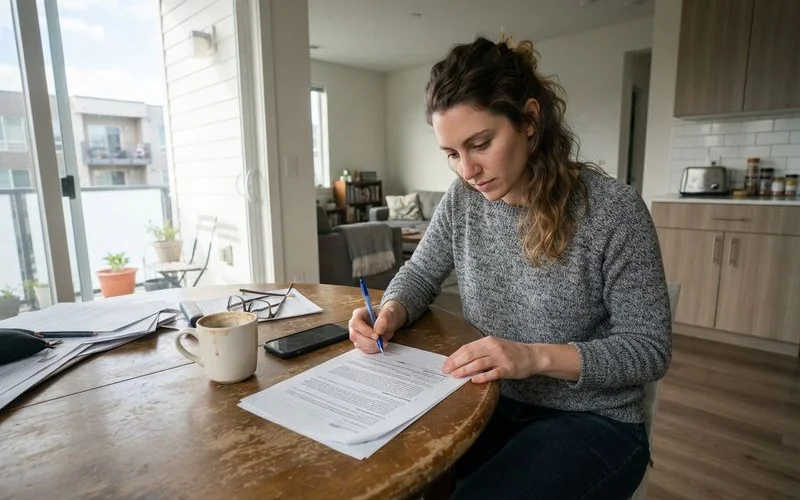
If something looks like it needs attention, mildew building up on siding, algae on a patio, a driveway that hasn’t been touched in years, the most effective approach is usually a written request rather than a verbal mention. Include photos, be specific about what you’re seeing, and frame it as a maintenance question rather than a complaint. Landlords and property managers are generally more responsive to a clear, documented request than a vague comment in passing.
If it’s genuinely a health or safety concern, like mold that seems to be spreading or a slip hazard from algae buildup on steps, say that directly, since it changes the urgency from a cosmetic ask to a maintenance issue that typically falls more clearly on the landlord.
If you want to handle it yourself
Some renters would rather just take care of minor cleaning themselves rather than wait on a request. If your lease doesn’t restrict it and it’s a small, low-risk area like a patio, that’s often fine. For anything involving the building’s siding, a shared driveway, or a larger job, get sign-off from your landlord first, both to avoid a dispute over unauthorized work and because using the wrong pressure or chemical on a surface you don’t own carries real risk if something goes wrong.
What if your landlord says no or ignores the request
If a documented, reasonable request goes unanswered, follow up in writing again and keep a copy for your records. In cases where the issue is genuinely a habitability concern rather than a cosmetic one, such as mold that appears to be spreading toward an interior wall, many local jurisdictions have tenant protections that go beyond a simple maintenance request. That’s a point where checking your lease terms alongside local landlord-tenant resources makes sense, rather than assuming there’s nothing you can do. For a purely cosmetic issue with no real habitability angle, persistence and a clear paper trail are usually your best tools.
Moving out and pressure washing
If your lease requires the property to be returned in a certain condition, check whether that includes any exterior surfaces you’ve had exclusive use of, like a private patio or a small fenced yard. It’s worth asking your landlord directly whether move-out cleaning expectations extend outdoors, since assumptions here can turn into a disputed charge against your deposit if you guess wrong.
Renters aren’t the only ones navigating who handles this. If you’re coordinating on behalf of an aging parent or family member instead, the pressure washing for seniors and accessibility guide covers similar ground for that situation.
If your landlord agrees to hire it out, or if it’s something you’re covering yourself, browse local providers from the homepage to compare options. Our methodology page explains how we score and rank the companies listed.
FAQ
- Is a landlord required to pressure wash a rental property?
- It depends on your lease and local landlord-tenant rules. Many leases put general exterior maintenance on the landlord, but specifics vary, so check your lease first rather than assuming.
- Can I pressure wash a rental myself?
- Check your lease before doing any exterior work yourself. Some leases restrict what tenants can do to the property, and using the wrong pressure or chemical on siding, a deck, or a driveway you don't own carries real damage risk.
- What if my patio or deck has visible mold or mildew?
- Document it with photos and raise it with your landlord or property manager directly, especially if it might be a health or maintenance issue rather than just cosmetic. Put the request in writing so there's a record.
- Does it matter if it's a single-family rental versus an apartment complex?
- Yes, in practice. Single-family rental landlords vary widely in what they handle. Apartment complexes and property management companies more often have a standard maintenance schedule that includes common areas and sometimes patios or balconies.