
Pressure washing rules, permits, and runoff regulations in South Carolina
By Aisha Vogel · Updated 2026-06-29
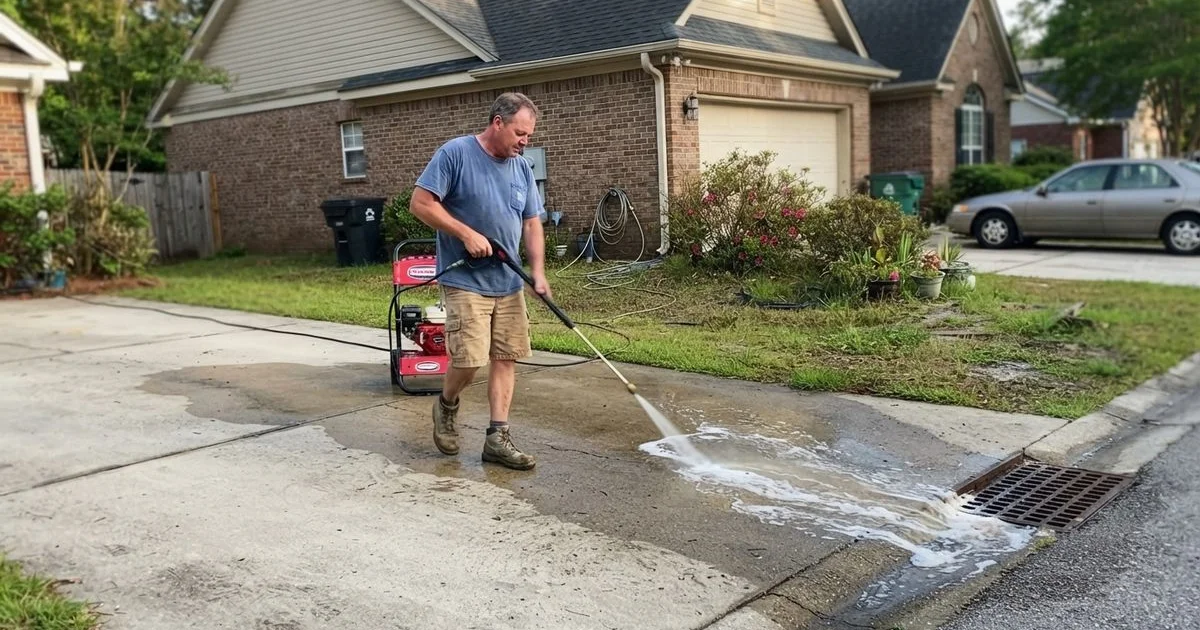
Most homeowners never think about regulation until a neighbor mentions it or an HOA asks a question the contractor can’t answer. Pressure washing itself isn’t heavily regulated in South Carolina, but wastewater runoff and where it ends up is a real compliance issue, especially for properties near waterways.
This is general information, not legal advice. Rules can vary by municipality and HOA, so confirm specifics with your local authority or an attorney if you have a compliance question.
The core issue: where does the water go
A pressure washing job doesn’t just clean a surface, it also produces wastewater carrying whatever was on that surface: dirt, algae, oil, detergent, and sometimes cleaning chemicals like sodium hypochlorite. When that water flows into a storm drain, it typically goes straight to a nearby creek or river without any treatment, since storm drains and sewer systems are usually separate. Columbia sits in the Congaree and Broad River watershed, and a fair amount of residential and commercial runoff drains in that direction, which is part of why this matters more here than it might in a landlocked area with no nearby waterways.
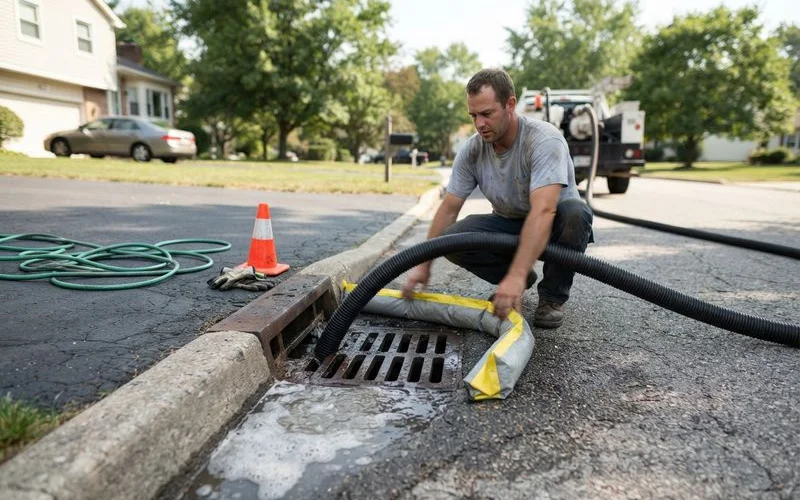
Responsible contractors manage this by using biodegradable detergents, diverting or vacuuming up wastewater on hard surfaces, and avoiding chemical use near storm drains, flower beds, or grass that carries runoff downhill.
HOA and community-level requirements
Some communities, particularly those near Lake Murray and other waterways around the Midlands, have started asking contractors to show proof of runoff containment before approving exterior cleaning work. This isn’t universal, but if you live in an HOA community, it’s worth checking your covenants or asking your HOA directly whether any runoff or wastewater provisions apply before you schedule a job.
| Situation | What to check |
|---|---|
| HOA community near a lake or waterway | Ask if runoff containment proof is required before booking |
| Job near a storm drain or steep runoff slope | Ask contractor how they’ll divert or capture wastewater |
| Commercial property with a parking lot | Ask about wastewater reclamation for large hard-surface jobs |
| Standard residential yard with normal drainage | Lower risk, but biodegradable detergent is still a reasonable ask |
Licensing and insurance, not permits
For a homeowner washing their own property, there’s no permit requirement to worry about. For hiring a contractor, the more relevant question isn’t a permit, it’s whether the business carries general liability insurance and, where applicable, a local business license. Requirements can vary by municipality, so if a contractor’s answer is vague, that’s worth following up on rather than assuming it’s fine.
What to ask before you book
- Do you use biodegradable detergents, and can you name the brand?
- How do you keep runoff away from storm drains and my neighbor’s yard?
- Are you insured, and can you provide proof if asked?
- If my HOA requires documentation, can you provide it?
These questions matter most for large hard-surface jobs like driveways and parking lots, where the volume of runoff is highest, and for any property close to a lake, creek, or drainage easement.
What happens if runoff becomes a real problem
Most residential jobs never trigger any regulatory attention, since the volume of runoff from a single house wash is modest. It becomes a more serious issue at scale, particularly for commercial properties with large parking lots or multiple buildings on a repeated cleaning schedule, where cumulative chemical runoff into a storm system is more likely to draw notice from local environmental or stormwater authorities. This is one more reason commercial contracts are worth vetting for wastewater practices specifically, beyond just price and scheduling.
A note for homeowners doing it themselves
If you’re renting equipment and washing your own driveway or siding, the same runoff-conscious habits apply even without a contractor’s obligations. Choosing a biodegradable detergent over a harsher industrial chemical, and directing your rinse water away from storm drains and toward your own lawn where it can filter through soil, is a simple way to reduce your own impact without needing to research local ordinances in detail.
Providers who lean into runoff-conscious practices are listed in our eco-friendly and biodegradable products category. For a look at how we verify credentials and score local companies, see our methodology page, or start from the homepage to browse all service categories.
FAQ
- Do I need a permit to pressure wash my own house?
- No. Washing your own home, driveway, or deck as a homeowner doesn't require a permit. Permit and licensing rules generally apply to contractors operating as a business, not to DIY work on your own property.
- Is it illegal to let pressure washing runoff go into a storm drain?
- Wastewater carrying detergent, oil, or cleaning chemicals into a storm drain can run afoul of stormwater regulations, since storm drains typically route straight to local waterways without treatment. Responsible contractors capture, divert, or filter runoff rather than letting it flow freely into a drain.
- Why do some HOAs require proof of runoff containment?
- Communities near lakes or waterways, including several around the Columbia area, sometimes require contractors to show they'll contain or properly manage wastewater before approving exterior cleaning work, since untreated runoff can affect water quality nearby.
- Do pressure washing contractors need a special license in South Carolina?
- Requirements vary by the scope and value of the work. It's reasonable to ask any contractor whether they carry general liability insurance and any applicable local business license, since standards can differ by municipality.