
Ladder and height safety before you DIY gutter or roof cleaning
By Aisha Vogel · Updated 2026-07-08
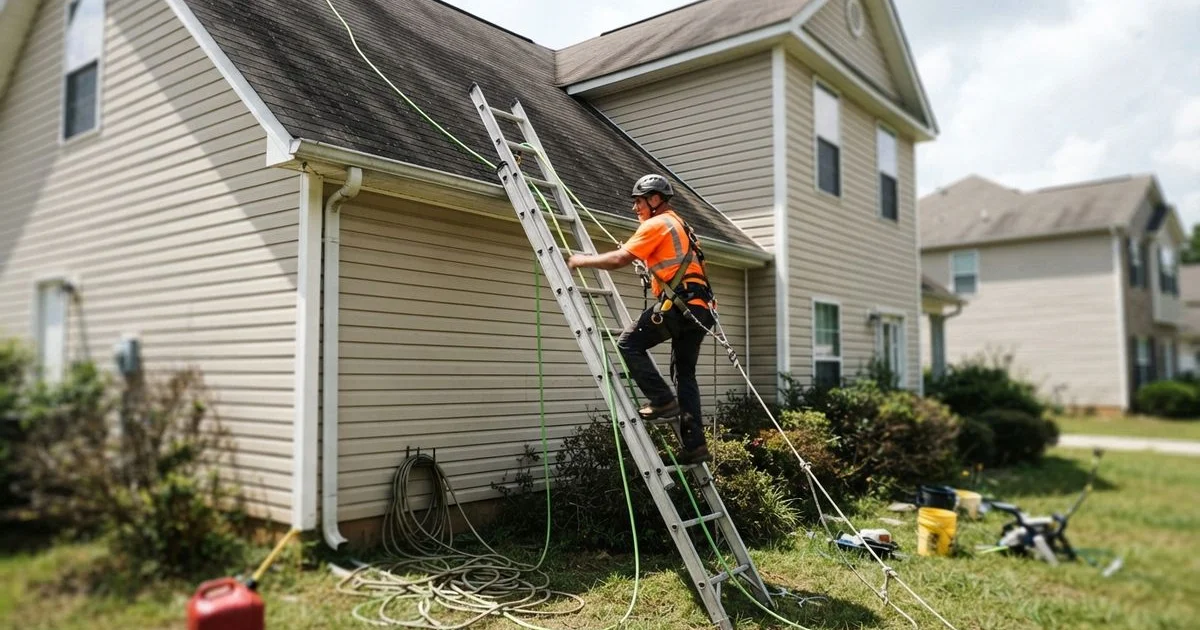
Gutter and roof cleaning look simple from the ground, but they account for a disproportionate share of home maintenance injuries, and it’s almost always the ladder, not the cleaning itself, that causes the problem. Before you grab a ladder this weekend, it’s worth understanding where the actual risk comes from.
This is general safety information, not a substitute for professional judgment about your specific property and physical ability.
Where the risk actually comes from
Cleaning gutters isn’t dangerous. Getting to them is. The most common ways people get hurt doing this themselves:
- Overreaching. Leaning too far to the side instead of climbing down and moving the ladder is one of the most common causes of ladder falls.
- Unstable footing. Setting a ladder on wet grass, mulch, or an uneven surface without checking it’s fully stable first.
- Wrong ladder angle. A ladder set too upright can tip backward; one set too shallow can slide out at the base.
- Working alone. No one to hold the ladder, spot you, or call for help if something goes wrong.
- Wet conditions. Damp leaves, morning dew, or a recent rain make both the ladder and the roof edge significantly more slippery.
Height changes the stakes fast
| Situation | Relative risk |
|---|---|
| Single-story home, dry conditions, sturdy ladder, someone else present | Lower risk |
| Two-story home, extension ladder required | Meaningfully higher risk |
| Steep or hard-to-access roofline | High risk, consider a professional |
| Working alone, any height | Higher risk regardless of home size |
| Wet or recently rained-on conditions | Higher risk regardless of home size |
A fall from a single-story gutter line is serious. A fall from a two-story extension ladder is a different category of injury risk entirely, which is the main reason height, more than the cleaning task itself, is what should drive the DIY-versus-hire decision.
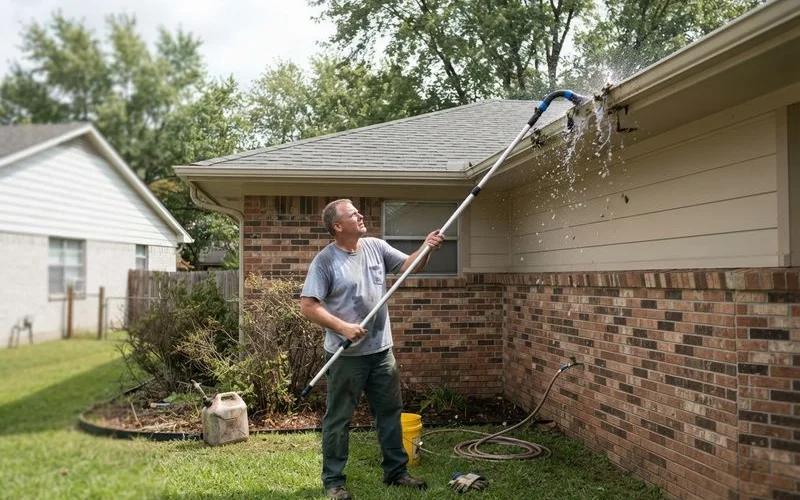
What professional crews do differently
Trained crews reduce risk in ways that are hard to replicate with a single ladder from the garage. Many use extension poles or vacuum-style systems that clear debris from the ground without climbing at all. When ladder work is necessary, crews typically use proper stabilizers, set the correct angle, and work with a second person spotting or holding the ladder. They also carry the experience of judging when a roofline or gutter height is beyond what a reasonable ladder setup can safely reach.
Basic precautions if you do it yourself
For lower-risk, single-story jobs where DIY is reasonable, a few habits cut the risk further. Use a ladder rated for your weight plus whatever you’re carrying, and check it for damage before every use, not just the first time. Set it on firm, level ground, never on a bucket, block, or uneven patch to gain a few extra inches. Keep three points of contact at all times, which means not carrying tools in both hands while climbing. And tell someone you’re up there, even for a quick job, so help isn’t delayed if something goes wrong.
Roof access carries its own risk beyond the ladder
Getting onto the roof itself, rather than just working from a ladder at gutter height, adds fall risk that’s a different category entirely. Wet or algae-covered shingles are especially slick, and a slope that looks manageable from the ground can feel very different once you’re standing on it. This is one of the clearest cases where professional soft washing crews earn their cost: they’re equipped and experienced for roof access in a way a homeowner doing this once a year typically isn’t.
A reasonable way to decide
If your home is a single story, the ground below your gutters is dry and level, and you have someone else around while you work, DIY is a defensible choice for occasional cleaning. If any of those conditions aren’t true, especially height or actual roof access, the cost of hiring a pro is small compared to the risk of a serious fall.
Compare local gutter cleaning providers in our gutter cleaning category, or browse other services from the homepage. See our methodology page for how we evaluate the companies listed here.
FAQ
- What's the biggest risk with DIY gutter cleaning?
- Falls. Most gutter cleaning injuries come from ladder instability, overreaching to the side instead of moving the ladder, or losing footing on wet or uneven ground below the ladder.
- Is a two-story home significantly more dangerous to clean yourself?
- Yes. Height increases the severity of a fall substantially, and a two-story gutter line often requires an extension ladder, which is less stable than a shorter one and harder to set up safely alone.
- What do professional crews do differently for safety?
- Trained crews use proper ladder angles and stabilizers, often work in pairs so someone can hold or spot the ladder, and in many cases use extension poles or vacuum systems from the ground instead of climbing at all.
- Is it ever reasonable to DIY gutter cleaning?
- A single-story home with stable, dry ground and a sturdy ladder is a lower-risk scenario. Two-story homes, steep roof access, wet conditions, or working alone all raise the risk enough that hiring a pro is worth the cost.