
Mold and mildew on your siding: health risk, or just cosmetic?
By Aisha Vogel · Updated 2026-07-06
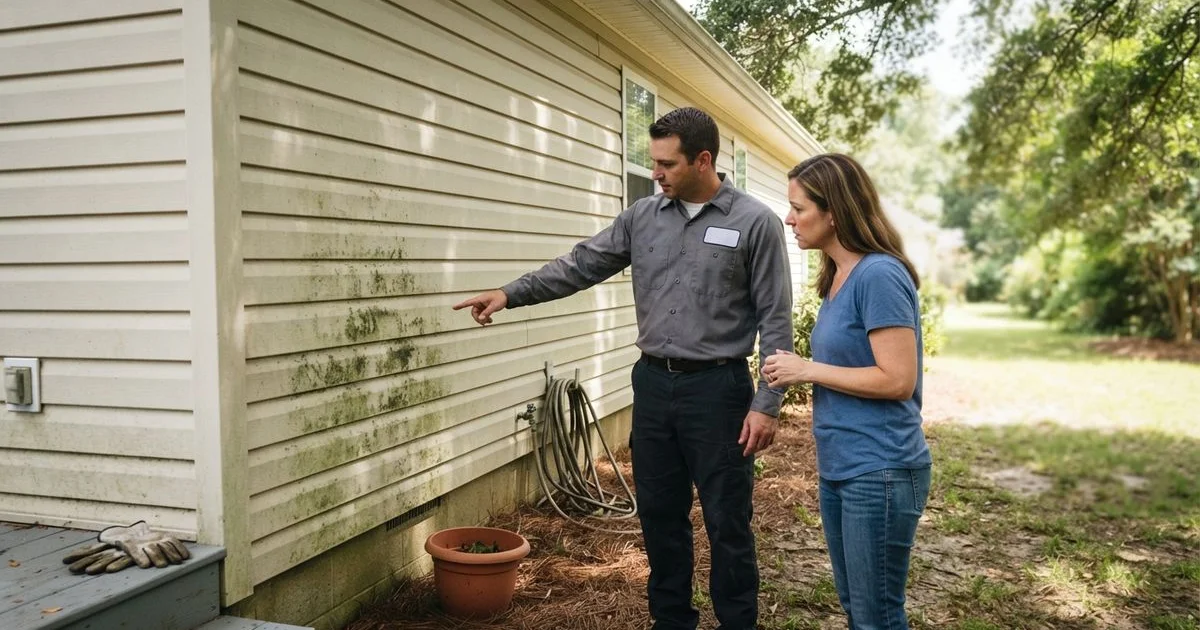
Green or black growth creeping across your siding, especially on shaded, north-facing walls, is one of the most common reasons Columbia homeowners call for a house wash. Before you assume the worst, it helps to know what you’re actually looking at and when it’s more than a cosmetic issue.
This is general information, not medical advice. If you have specific health concerns related to mold exposure, consult a physician or a qualified indoor air quality professional.
What’s growing on your siding
Most of what shows up as green or dark staining on exterior siding is mildew, a surface-level fungus that thrives in humid, shaded conditions. Columbia’s climate, especially in yards with heavy tree cover or homes with limited direct sun on certain walls, makes for near-ideal mildew conditions. It typically appears within a season or two of a home going without a wash, particularly on the north or east-facing sides that stay damp longest.
Is it actually a health concern
This is the key distinction: exterior mildew on siding is outside your living space. It’s not circulating through the air you breathe indoors the way mold growing inside a wall cavity or HVAC system would. For most homeowners, it’s more of a cosmetic and material-preservation issue than a direct health hazard.
That changes if there’s a connection to the inside of the home. If you notice a musty smell indoors, visible growth on interior walls near an exterior wall, or paint bubbling and peeling on interior surfaces, that points to moisture getting trapped somewhere it shouldn’t be, and that’s a different, more serious situation worth having assessed rather than just washing the outside and hoping it resolves.
| Signal | What it likely means |
|---|---|
| Green or black staining, outside only, no odor indoors | Surface mildew, address with a wash |
| Staining that returns quickly after cleaning | Persistent shade and moisture, may need more frequent cleaning |
| Musty smell inside near an exterior wall | Possible moisture intrusion, worth a closer look |
| Interior mold or peeling paint on an exterior wall | Get it assessed before just washing the exterior |
Why a wash usually solves it
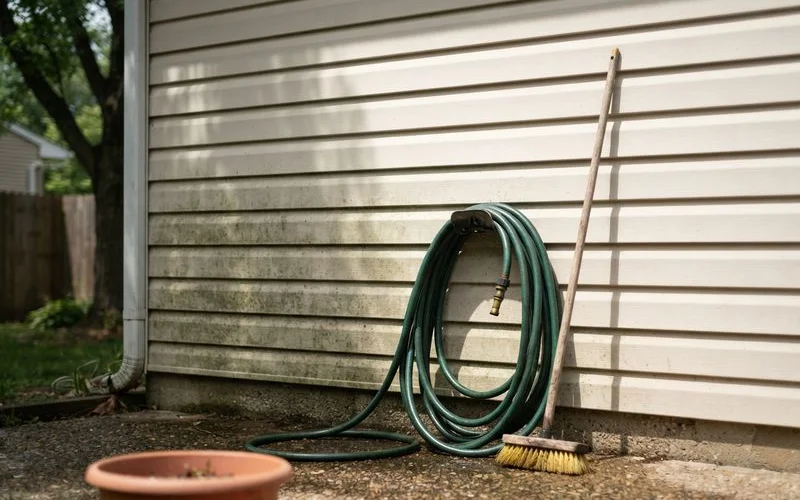
For straightforward surface mildew, a soft wash with the right cleaning solution kills the growth at the surface and rinses it away, which is different from pressure alone just blasting off what’s visible while leaving spores behind. That’s part of why soft washing, not high-pressure washing, is the standard approach for siding: it treats the cause, not just the appearance.
Which siding materials show it fastest
Vinyl siding tends to show mildew staining clearly since it’s usually a light color, making even light growth visible. Wood and stucco can also host mildew, but the staining is sometimes less obvious against a darker or more textured surface until it’s built up significantly. Brick is more resistant overall but can still develop growth in mortar joints and shaded lower sections near the ground.
Keeping it from coming back
Shaded, tree-covered walls will likely need mildew addressed more often than sun-exposed sides, sometimes annually versus every couple of years elsewhere on the same house. Trimming back tree branches or shrubs that keep a wall in constant shade can meaningfully slow how fast it returns. Sprinkler heads that spray directly onto siding are another common, overlooked cause worth checking, since consistent moisture from irrigation can keep a wall damp enough for mildew to thrive even in an otherwise sunny spot.
When to just call someone
If you’ve had a wash done recently and the growth is already back within a few months, or if you’re genuinely unsure whether what you’re seeing is limited to the exterior, it’s worth getting a second opinion rather than guessing. A pressure washing provider can usually tell you quickly whether it looks like standard exterior mildew or something that warrants a closer look, and can point you toward a moisture or air quality professional if the signs suggest it’s more than surface-level. Curious what a booked visit actually involves? The house washing appointment guide walks through prep, the wash itself, and the final walkthrough.
To compare local house washing providers, browse the house washing category, or start from the homepage to see all service categories. Our methodology page explains how we evaluate and score the companies listed.
FAQ
- Is green or black growth on my siding dangerous?
- Surface mildew on the outside of siding is mostly a cosmetic and material-longevity issue, not typically a direct health hazard for people inside the home, since it's outdoors and not circulating through your indoor air.
- How is this different from mold inside my home?
- Indoor mold affects the air you breathe and can be a genuine health concern, especially for people with allergies or respiratory conditions. Exterior mildew on siding is a different situation because it stays outside.
- Can exterior mildew turn into an indoor problem?
- If moisture is getting trapped behind siding, whether from the mildew itself or a separate leak, that can lead to interior mold growth over time. Persistent green or black growth paired with any interior musty smell is worth having checked.
- Will washing the siding get rid of it for good?
- It removes what's there, but mildew tends to return in shaded, damp spots unless the underlying moisture or shade conditions change. Regular cleaning on a yearly or twice-yearly schedule keeps it from building back up.